

The Trump administration’s attempt to prevent certification of an Alaska Senate election raises a fundamental question about American democracy: When political leaders attempt to interfere with the lawful transfer of electoral power, where does political advocacy end and the subversion of democracy begin?
The Alaska case: Attempting to stop an election before the votes are counted
On November 1, 2026, federal Judge Sharon Gleason dismissed an extraordinary lawsuit brought by President Donald Trump’s Department of Justice seeking to block certification of Alaska’s U.S. Senate election under certain circumstances.
The lawsuit concerned incumbent Republican Senator Dan Sullivan, Democratic challenger Mary Peltola, and another candidate, Daniel Sullivan Jr., whose similar name raised allegations of voter confusion.
The Trump administration argued that the presence of two similarly named candidates could improperly influence the election. Trump said he ordered the lawsuit, and the Justice Department sought an opportunity to investigate before the state certified the results.
Judge Gleason rejected the federal government’s legal basis for bringing the case and found serious problems with the proposed remedy, including its implications for ballot secrecy.
The administration announced an appeal.
This is not an ordinary election challenge filed after discovering irregularities in a completed vote count. The federal government sought judicial intervention before the election had concluded, with the possibility of preventing certification if the Republican incumbent lost.
The distinction is fundamental.
An election challenge ordinarily seeks to establish whether the law was followed and whether eligible votes were counted correctly. An effort to prevent certification based on a speculative possibility of voter confusion raises a different concern: whether governmental power is being used to condition recognition of an election on the political identity of its winner.
There is a legitimate counterargument. Similar candidate names can confuse voters, and credible evidence of intentional election interference deserves investigation. Reports about efforts by Democratic operatives to recruit the second Sullivan candidate have added substance to that concern, although the allegations remain disputed. The Alaska Supreme Court had previously upheld Sullivan Jr.’s right to appear on the ballot.
But even legitimate concerns about campaign conduct do not automatically justify withholding certification of lawful votes.
The danger is not that an election is investigated. It is that the authority to investigate could become a mechanism for preventing an unfavorable result from taking effect.
January 6 was not an isolated event
To understand why the Alaska lawsuit is troubling, it is necessary to examine the broader record surrounding the 2020 presidential election.
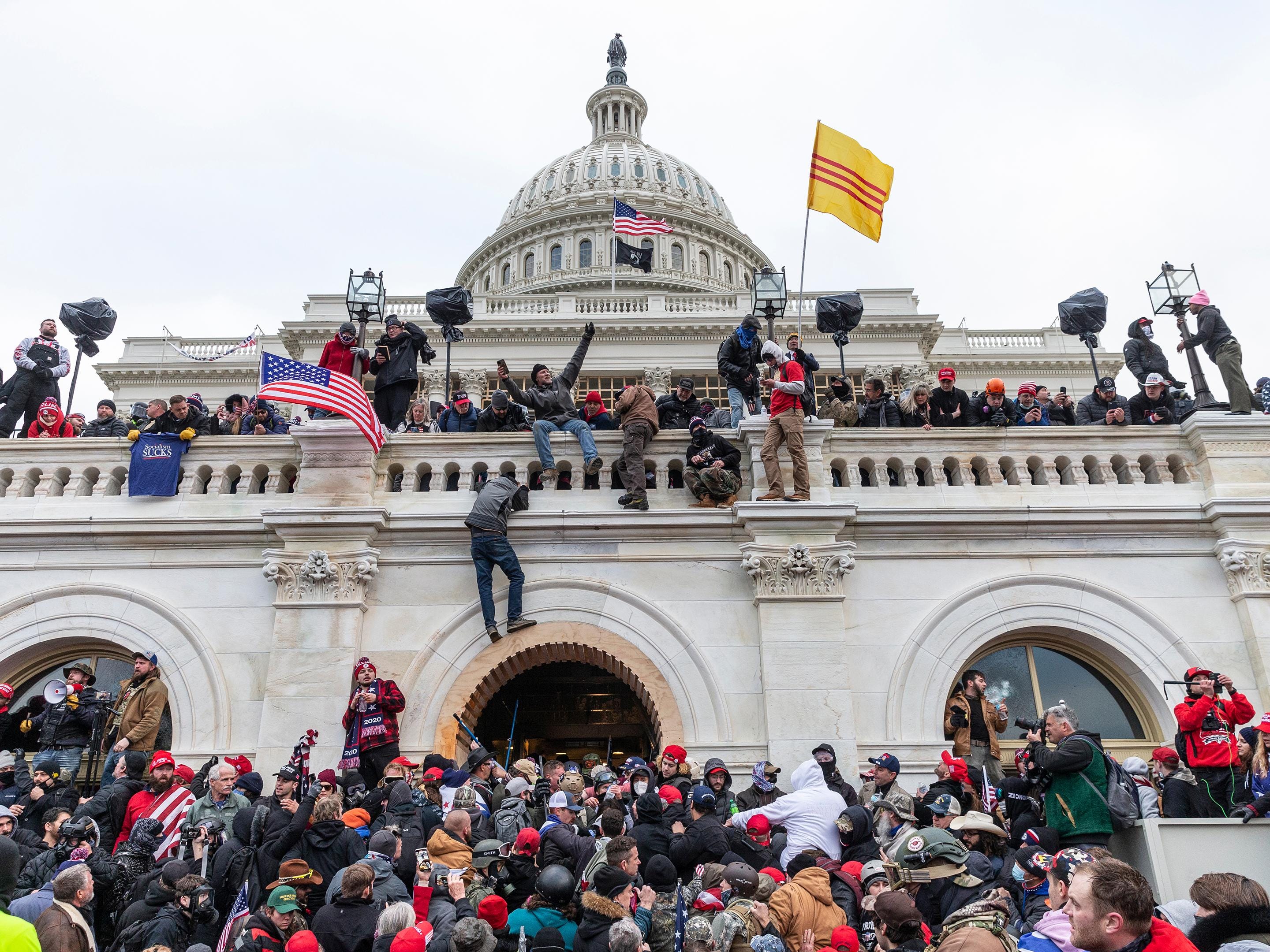
The January 6 attack did not begin with the crowd entering the Capitol. It followed weeks of attempts to change, reject, or delay the lawful election outcome through state officials, federal institutions, alternative electoral certificates, and congressional procedures.
The House January 6 Select Committee documented these efforts in its final report, drawing on testimony, communications, documents, and other evidence.
The documented attempts to overturn the 2020 election

1. Georgia: Pressure to change certified votes
On January 2, 2021, Trump pressured Georgia Secretary of State Brad Raffensperger to find 11,780 votes, enough to reverse his defeat in the state. Georgia had already conducted recounts and reviews that confirmed the result.
This was a direct attempt to change an electoral outcome through pressure on a state election official.
2. Seven states: The false-elector scheme
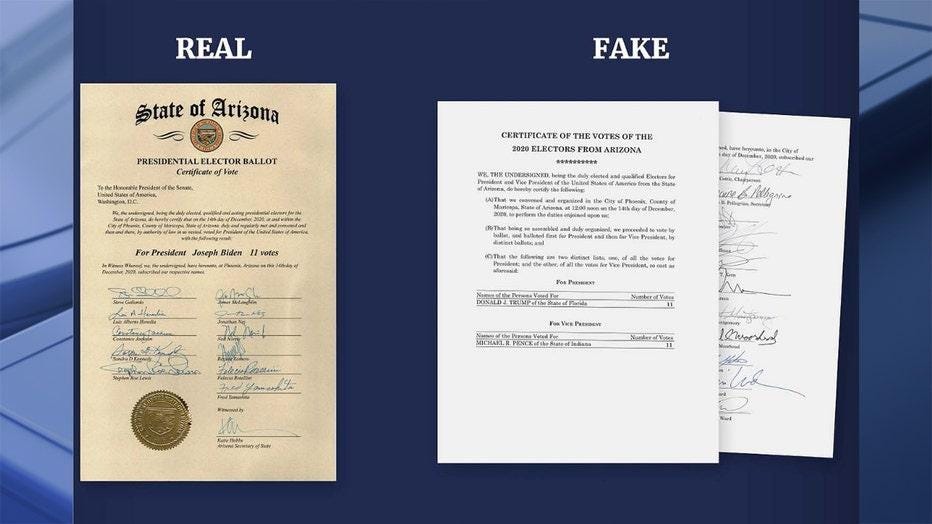
Trump allies organized alternative electoral certificates in seven states that Joe Biden had won. The plan was to create a basis for rejecting or delaying recognition of legitimate electoral votes.
This was an effort to substitute unauthorized electoral claims for state-certified results.
3. Vice President Pence: Pressure to reject the electoral count
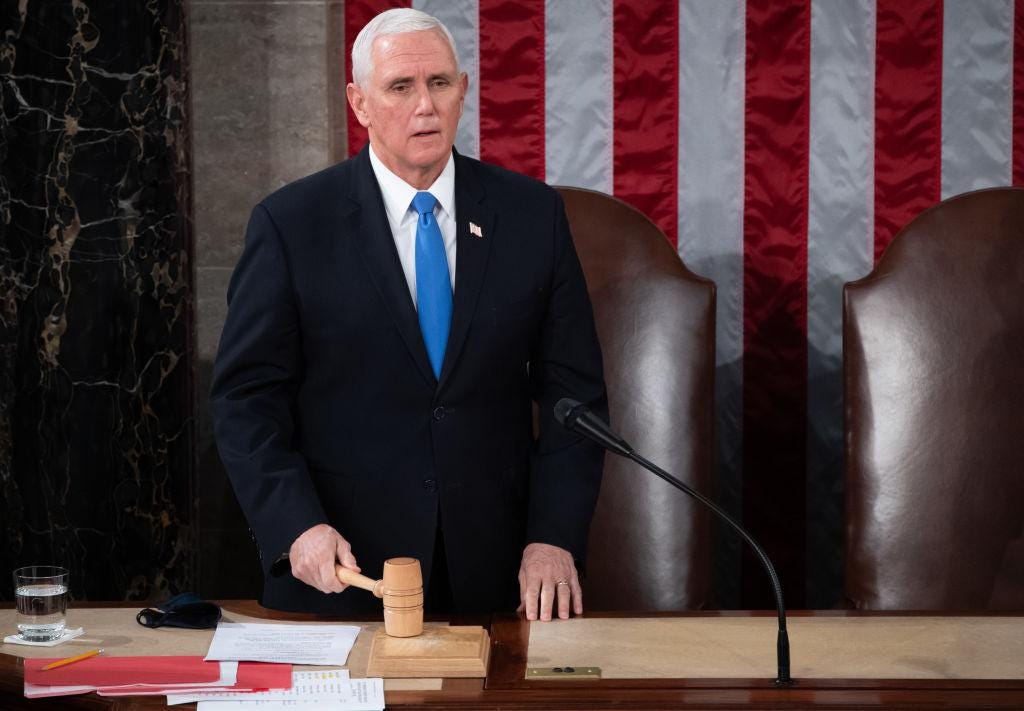
Trump and attorney John Eastman sought to persuade Vice President Mike Pence to reject or delay counting electoral votes, despite warnings that the vice president lacked the constitutional authority to do so.
The proposed action would have disrupted the constitutional mechanism for transferring presidential power.

4. Department of Justice: Attempt to enlist federal authority
Trump attempted to involve Justice Department officials in advancing unfounded election-fraud claims. Jeffrey Clark supported sending letters to contested states suggesting federal concerns about election integrity that could be used to justify revisiting electoral results.
Senior Justice Department officials resisted.
5. January 6: Disruption of congressional certification
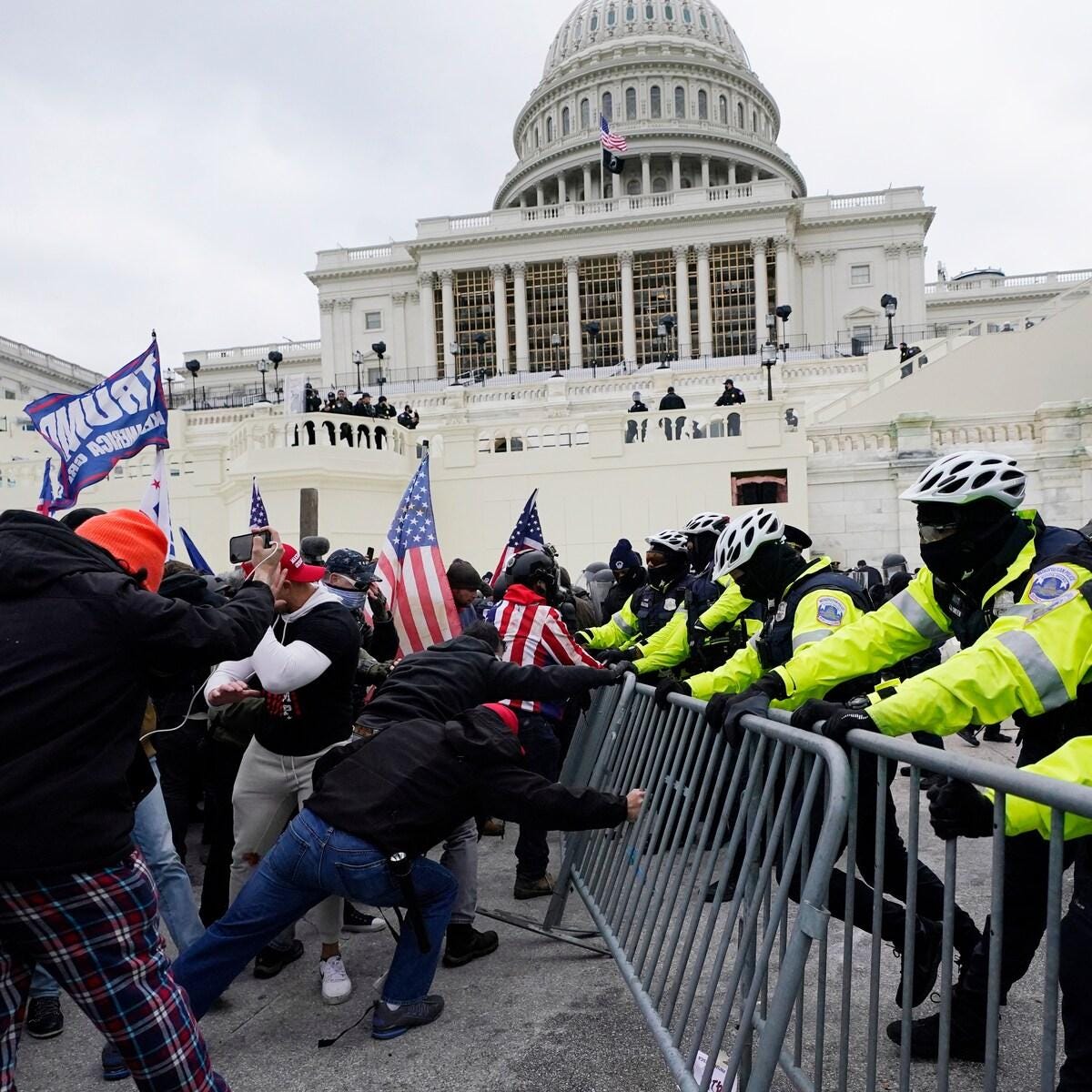
After weeks of pressure and false election claims, a violent mob attacked the Capitol as Congress met to count electoral votes.
The certification was interrupted. The House committee concluded that Trump’s conduct was central to the effort to overturn the election, including his failure to intervene promptly as the violence continued.
These were not merely disagreements about election policy. They involved attempts to alter the effect of votes already cast and legally certified.
The pattern continues into 2026
The Alaska lawsuit is not the only recent example of federal intervention in election administration. Several other developments have raised concerns about the boundaries between legitimate enforcement of election laws and attempts to influence electoral outcomes.
6. Federal attempts to control election procedures
In March 2025 and again in March 2026, Trump issued executive orders attempting to change aspects of federal election administration.
The orders addressed voter eligibility verification, election procedures, and mail ballots. One 2026 provision sought to involve the U.S. Postal Service in determining which mail ballots could be delivered.
Federal courts blocked significant portions of the earlier order, while other provisions remained under legal challenge. The administration argued that stronger measures were necessary to protect election integrity; opponents argued that the orders exceeded presidential authority over elections, which the Constitution primarily assigns to states and Congress.
The constitutional concern is whether a president can use executive authority to alter election procedures without the legislation and constitutional authorization normally required.
7. Demands for sensitive state voter records
In 2026, the Justice Department pursued extensive voter-registration information from numerous states, including personal identifying information.
According to the Associated Press, federal officials also directed 29 states and the District of Columbia to preserve records from the 2024 election while litigation over voter data continued.
The administration maintained that the records were needed to enforce federal election laws. State officials raised concerns about privacy, legal authority, and the potential misuse of voter information.
The important distinction is that maintaining accurate voter rolls is a legitimate government responsibility. But the authority to obtain sensitive records must still comply with federal and state law.
8. Subpoenas and investigations immediately before the midterms
On October 28, Reuters reported that the Trump administration had issued more than 100 subpoenas seeking voter information in at least 13 states.
The investigations focused on allegations of unlawful voting by noncitizens. California election officials and other critics questioned the timing, scope, and evidentiary basis of the demands.
In California, election-worker unions also filed a lawsuit challenging federal actions they characterized as threats to election officials.
Federal investigations are not inherently election interference. Yet their timing and methods matter. When criminal investigative powers are directed at election administrators immediately before voting, courts must consider whether those powers are being exercised lawfully and whether they interfere with the administration of an election.
Why January 6 can reasonably be described as an attempted coup
The word coup is often associated with military officers seizing government buildings and overthrowing an elected leader.
Political science recognizes a broader category sometimes called a self-coup, in which an incumbent leader attempts to remain in power by unlawfully disabling constitutional restraints or overriding the political process.
Under that analytical framework, January 6 can reasonably be described as part of an attempted self-coup.
The evidence supporting that characterization extends beyond the violence at the Capitol.
First, the objective was to prevent the lawful result of the 2020 presidential election from taking effect.
Second, the effort involved multiple coordinated avenues: pressuring state election officials, organizing false electoral certificates, attempting to enlist the Justice Department, and urging the vice president to reject or delay electoral votes.
Third, the campaign continued after courts rejected election challenges and officials informed Trump that the claimed widespread fraud had not been established.
Fourth, the Capitol attack physically interrupted the congressional process required to recognize the incoming president.
The January 6 committee concluded that these actions formed a multipart effort to overturn the election. Federal Judge David Carter separately found, under a civil evidentiary standard, that Trump more likely than not corruptly attempted to obstruct Congress’s electoral count.
That does not mean a court convicted Trump of the criminal offense of carrying out a coup. The term is a historical and political-science characterization, not a substitute for a criminal judgment.
Nevertheless, the documented effort to retain presidential power contrary to the certified electoral outcome provides a substantial factual basis for the attempted-coup interpretation.
What connects January 6 and the Alaska lawsuit?
The most important similarity is not violence. There is no evidence that the Alaska lawsuit involved an organized violent effort.
The similarity lies in the question of who has the authority to determine whether an election result is allowed to stand.
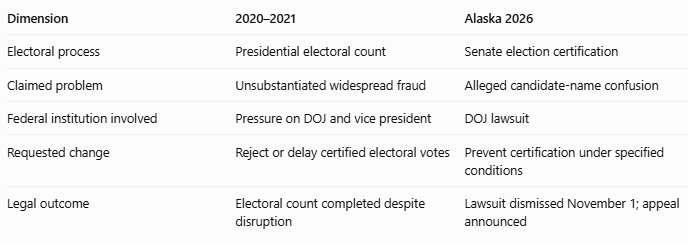
These cases differ significantly in scale, factual circumstances, and legal mechanisms. The Alaska case also includes allegations of potentially deceptive candidate recruitment that merit factual examination.
Still, both episodes raise the constitutional problem of using institutional authority to prevent an election result from receiving its lawful effect.
The Alaska ruling demonstrates an important safeguard: the executive branch cannot simply demand that a state withhold certification without establishing a valid legal basis and a constitutionally permissible remedy.
The deeper danger: Normalizing the rejection of election results
Democracy does not require politicians to accept every election administration decision without question. Legal challenges, recounts, investigations, and judicial review are essential protections against error and misconduct.
What democracy does require is that those mechanisms remain subordinate to the law rather than to the political preferences of whoever holds office.
The distinction between legitimate election oversight and democratic subversion can be assessed through four questions:
Is there credible evidence of an actual legal violation?
Is the proposed remedy authorized by law and proportionate to the alleged problem?
Would the same remedy be pursued regardless of which political party benefited?
Does the action preserve voters’ constitutional rights and the lawful transfer of power?
The January 6 record demonstrates the danger when those principles are abandoned. The Alaska lawsuit illustrates why the same principles must be defended before election results are even known.
Conclusion: The Constitution, not the incumbent, determines who governs
The significance of January 6, 2021, is not confined to the images of rioters entering the Capitol. Its greater historical importance lies in the documented attempt to use multiple governmental and political mechanisms to reverse a lawful presidential election.
That evidence supports describing January 6 as the culmination of an attempted self-coup.
The November 2026 Alaska lawsuit does not, by itself, prove a new coup attempt. But when examined alongside the documented 2020–2021 efforts and the administration’s more recent attempts to expand federal authority over election administration, it raises serious questions about whether institutional mechanisms can be used to obstruct unfavorable electoral outcomes.
The appropriate response is neither to presume every election challenge fraudulent nor to accept every invocation of election integrity at face value.
It is to insist upon evidence, constitutional authority, judicial independence, ballot secrecy, and equal application of the law.
The defining principle of a constitutional democracy is that the government does not decide which election results it will accept. The voters decide who governs, through elections conducted and certified according to law.
Principal sources
The factual record for this article draws on NPR’s November 1 Alaska report, NPR’s syndicated reporting at OPB, the January 6 Select Committee’s final report, Reuters’ October 30 election investigation, and the Associated Press report on federal voter-data demands.
Editorial note: This article distinguishes established events, disputed allegations, judicial findings, and political-science interpretations. The term “attempted coup” is used as an analytical characterization of the 2020–2021 effort, not as a claim of a criminal conviction for that offense.