

By HASE Fiero | IE Press
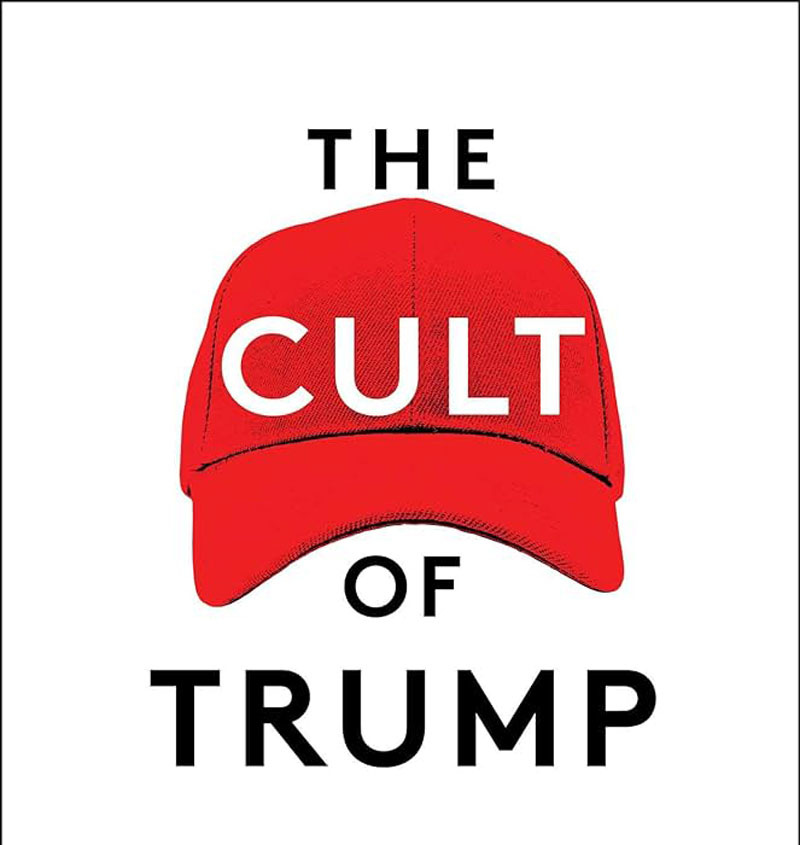
The question has been asked for nearly a decade now, in living rooms and editorial offices and political science departments and late-night conversations between people who cannot understand what they are watching. The question is not whether it ends. Every political cult in recorded history has ended. Every single one. The question is how, through what specific mechanism, along what timeline, at what cost to the country that has to absorb the wreckage when the structure finally gives way.
To answer that question honestly requires setting aside the framework most political analysts reach for first. This is not a policy disagreement that can be resolved through better messaging or more persuasive arguments. It is not an information problem that dissolves when the right fact reaches the right person. It is not a demographic problem or a media literacy problem or an economic anxiety problem, though elements of all three are present in its composition. What it is, structurally, psychologically, historically, is a cult. And cults do not end because their members get smarter. They end because the architecture holding them together stops working.
There are four mechanisms through which that architecture collapses. They are not mutually exclusive. They tend to operate simultaneously, reinforcing each other, accelerating the timeline once any single one gains sufficient momentum. History shows us all four with uncomfortable precision.
I. The Cornered Man: When Legal Walls Become Existential Ones
The first mechanism is the most dangerous and the one that carries the highest potential cost for the country absorbing the collapse.
Jim Jones built one of the most methodologically sophisticated cult architectures in American history over two decades of patient work in Indianapolis. He claimed divine authority. He told his congregation that every institution in American society was conspiring against them, and that he alone was the barrier between his followers and destruction. When government scrutiny mounted in the mid-1970s, abuse allegations, congressional inquiries, former members going public, Jones did not moderate. He radicalized. He moved 900 followers into the Guyanese jungle, physically separating them from any reality that might compete with his own. When a congressman arrived to investigate and Jones ran out of room entirely, he ordered a mass suicide. Nine hundred and eighteen people died in a single afternoon. The followers did not leave. Jones collapsed, and he took them with him.
The clinical term for what Jones executed is catastrophic cult collapse. The mechanism is this: a leader who has spent years convincing followers that he is the only thing standing between them and annihilation will, when he himself faces annihilation with no viable exit, reframe total loss as the ultimate loyalty test. He does not tell followers he is losing. He tells them the sacrifice he is asking for is the proof of who they really are.
Now apply that framework to what is actually happening. Donald Trump has been indicted on 91 felony counts across four jurisdictions. He has been found liable for sexual abuse and fraud in civil court. He has been disqualified from the ballot in multiple states before the Supreme Court intervened. He has lost the presidency once and, as of his return to office, operates in an environment where the legal machinery he spent his first term trying to dismantle is still partially functional and is still accumulating evidence.
The pattern is recognizable. The rhetoric has already shifted from we will win to if they destroy me, they destroy you. The ask has escalated from vote for me to fight for me to language that several former senior officials, people who were in the room — have characterized as explicitly inciting. The more cornered the leader becomes, the more he demands of the people who remain. More sacrifice. More willingness to ignore what their own eyes are showing them. More radical proof of devotion.
The warning sign is not aggression. Early-phase pressure produces aggression as a performance of strength. The warning sign is desperation wearing aggression as a costume, the shift from we will win to if we cannot win, we will burn everything down and call it victory. That shift has already occurred in the public rhetoric. The question is how far the institutional guardrails hold when a cornered man with a devoted following decides that controlled demolition is preferable to acknowledged defeat.
II. The Inner Circle Speaks: Why Betrayal Breaks What Facts Cannot
The second mechanism is already in motion, moving on a timeline that feels slow until the day it does not.
Facts do not break cults. This is not a cynical observation, it is a documented psychological reality. Cult members are not simply uninformed people who need better information. They are people who have constructed an epistemological framework in which any information originating from outside the group is automatically suspect as an element of the conspiracy the group was formed to resist. CNN cannot break it. A court ruling cannot break it. A journalist with receipts cannot break it, because the journalist is, by definition, part of the enemy structure the cult was built to oppose.
What breaks it is betrayal. Not external criticism, internal defection. Someone from inside the tribe, someone who was in the room, someone the followers once trusted as one of their own.
Consider the roster of people who have spoken about Donald Trump from direct personal experience. His chief of staff, John Kelly, called him the most dangerous person ever to hold the American presidency. His secretary of defense, James Mattis, said he deliberately tried to divide the American people. His second secretary of defense, Mark Esper, documented his desire to deploy the military against American citizens. His chairman of the Joint Chiefs, Mark Milley, privately called him a fascist. His national security advisor, John Bolton, described decision-making that he characterized as a threat to national security. His own attorney general, William Barr, a man who spent years functioning as his institutional shield, ultimately concluded publicly that he was unfit for office. More than a dozen former senior staffers signed a letter making the same determination. His vice president refused to participate in the effort to overturn a presidential election and has since been open about why.
None of these are Democrats. None of these are journalists. These are people Trump hired. People who ran his government. People who were in the Oval Office, in the Situation Room, in the private conversations that never make it into the public record, until the person who was there decides to make them public.
Did this roster of defections break the cult before the 2024 election? No. But that is the wrong metric for evaluating its effect. Cult researchers studying defection patterns have documented a specific dynamic: inner circle departures do not produce a single dramatic rupture. They produce a slow erosion. Each person who speaks makes it marginally safer for the next person to speak. Each defection lowers the psychological cost of the one that follows it. What looks like a trickle is actually the early phase of a flood, and the flood becomes visible only in retrospect, when you can see the whole timeline at once rather than one day at a time.
You can dismiss one outsider indefinitely. You can explain away a journalist or a political opponent or a foreign critic. It becomes structurally harder to maintain that explanation when the person speaking is someone who chose to serve in the administration, who defended it publicly for years, who has direct personal knowledge of what happens behind the closed doors that followers never see. The list of those people is not shrinking. It is growing. And every name added to it makes the psychological work of dismissal slightly more expensive for the people still inside.
III. Reality as an Opponent: When the Promises Stop Coming True
The third mechanism is the one that operates on the longest timeline and the one that is ultimately most reliable, because it does not depend on any individual decision or defection. It depends only on the gap between what was promised and what is actually delivered, and reality, as a general rule, is more patient than any political movement.
In 1954, a suburban Chicago woman named Dorothy Martin told her followers that a UFO was coming on December 21st to rescue them before a cataclysmic flood destroyed the earth. Some of her followers sold their houses. Others quit their jobs. They gave up careers, relationships, and financial security to be present and ready for the event. December 21st came. Nothing happened. No flood. No UFO. Just a cold December morning in Illinois and a group of people standing in a field holding beliefs they had paid an enormous price to maintain.
Psychologist Leon Festinger had embedded himself in the group specifically to study what happened next. He expected mass defection. What he observed was the opposite: the most committed members became more devoted after the prophecy failed. They called newspapers. They preached harder. They recruited strangers. Festinger named what he was watching cognitive dissonance, the psychological mechanism that kicks in when a person’s actions and their beliefs come into irreconcilable conflict. His central finding was this: the members who had sacrificed the least walked away when the prophecy failed. The members who had given up the most doubled down indefinitely, because the only alternative was admitting that they had destroyed their lives for a lie, and that admission felt unsurvivable.
The Trump movement was built on a specific and audacious set of promises. Not subtle ones. Spectacular ones. So much winning. The revival of manufacturing. The elimination of the national debt. The restoration of American greatness in terms visceral enough that followers could feel it in their daily lives. A wall. The destruction of the deep state. The permanent defeat of the enemies who had been identified as the source of every grievance.
What is actually materializing is a different set of outcomes. Tariffs that Trump promised would be paid by foreign countries are being paid by American consumers at the checkout counter and on the factory floor. Prices are rising. Supply chains are disrupting. Farmers in states that formed the electoral base of the movement are watching export markets close in direct response to trade policy they were told would make them prosper. Medicaid cuts being discussed in Congress will fall disproportionately on the same working-class communities that delivered electoral margins. The jobs that were supposed to come back have not arrived in the volumes or the wage levels promised.
The Festinger dynamic is already visible in the response. The most committed followers describe rising prices as fake news. They describe personal economic pain as a necessary sacrifice in a larger war. They describe the gap between the promise and the reality as a sign that the enemies are fighting back harder, which proves how important the fight is. This is precisely the cognitive pattern Festinger documented, the doubling down, the reframing of failure as evidence of righteousness.
But Festinger also documented the timeline. The people who have given up the least, the casual supporters, the people who voted for Trump without restructuring their identities around the vote, will leave first. They are already leaving, measurably, in polling data that shows approval erosion among the suburban moderates and soft Republicans who provided the margin of victory. Each month that the promised outcomes fail to materialize widens the gap between belief and experience for the next tier of supporters. Reality does not win an argument. It accumulates a record. And the record is being written every time someone pays more for groceries than they did before and cannot make the math of winning add up.
IV. The Group Eats Itself: When the Loyalty Test Becomes Impossible to Pass
The fourth mechanism is the one already visible on the surface of the movement for anyone paying attention, and it may ultimately be the most structurally decisive of all.
In the 1970s, the social psychologist Henri Tajfel ran a series of experiments that became foundational to the field. He took strangers, people who had never met and shared no history, and divided them into arbitrary groups based on nothing more meaningful than a coin flip. Within minutes, people were treating members of their own group as family and members of the other group as adversaries. They were allocating resources to favor their group even when it made no rational sense. They were willing to reduce their own group’s absolute gains in order to increase their group’s advantage over the other group. Tajfel called what he was observing social identity theory, and its core insight is this: people do not merely join groups. They become the group. The group becomes the primary answer to the question who am I, and leaving the group does not feel like a decision, it feels like a death.
This is why simply making a better argument does not extract people from political cults. Leaving requires losing the most fundamental thing a person has. The social network. The shared language. The sense of purpose. The community that has come, for many followers, to replace every other form of belonging they had. For a significant portion of the Trump base, this movement is not a political preference, it is the most important community in their lives. Leaving it means starting over as a person.
But Tajfel also documented what happens to groups under specific conditions of stress, and this is the part that matters now. Groups fracture when the loyalty test becomes impossible to pass. When the definition of true believer keeps shifting to exclude people who were, by any prior standard, fully committed. When the movement stops directing its aggression outward toward the designated enemy and starts directing it inward toward its own members.
This is already happening inside the MAGA ecosystem with measurable intensity. Republicans who voted for the second impeachment became primary targets. Republicans who acknowledged the results of the 2020 election became traitors. Republicans who expressed any reservation about any element of the post-January 6th narrative became RINOs, a designation that functions inside the movement the way heretic functions inside a religious structure. The list of people who have been expelled from full membership through this process now includes multiple senators, numerous representatives, a former vice president, and multiple governors of states that were central to the movement’s electoral strategy.
The dynamic this creates is self-accelerating and ultimately self-consuming. Each new expulsion requires the remaining members to demonstrate their own loyalty through louder and more unqualified agreement. The threshold for acceptable belief keeps rising. The range of tolerated positions keeps narrowing. The space inside the movement becomes progressively less comfortable for anyone who retains any instinct for independent judgment, because independent judgment is precisely what the loyalty structure cannot accommodate.
What Tajfel found in his research, and what cult researchers have documented in every comparable historical movement, is that people do not publicly renounce groups that have become their primary identity. They quietly disappear. They stop showing up to rallies. They stop engaging in the group chats. They tell themselves they are just busy, or tired, or that they will re-engage when things calm down. They do not announce a change of position, because announcing a change of position requires confronting all the people whose opinion of them is tied to their group membership. They just gradually stop being present. And a movement that loses bodies without losing the loyalty of the bodies it retains still loses the capacity to translate devotion into electoral outcomes, which is, ultimately, the only currency that matters in a democratic system.
The Convergence: Four Mechanisms, One Timeline
These four mechanisms do not operate in sequence. They operate simultaneously, each one feeding the others, each one creating conditions that accelerate the rest.
The mounting legal pressure on the leader produces more desperate asks of the followers, which raises the loyalty threshold, which accelerates the purge of insufficiently devoted members, which shrinks the community, which creates conditions for inner circle defections, which makes the epistemological maintenance more expensive, which makes the gap between the promised outcomes and the lived reality harder to paper over with conspiracy explanations. The four mechanisms form a feedback loop, and once enough of them are simultaneously in motion, they are not individually reversible.
What history teaches, from Jonestown to Dorothy Martin’s frozen field in Illinois to every political cult that has risen and collapsed in the century of modern mass movements — is that the end, when it comes, does not look like a rational collective decision. It looks like exhaustion. It looks like the slow withdrawal of people who tell themselves they are just taking a break. It looks like the inner circle quietly updating their public statements to create distance from positions they held loudly just months before. It looks like the leader’s rhetoric becoming more extreme as the audience capable of absorbing the extremity gets smaller. It looks like a movement that was everywhere suddenly being difficult to find.
The people still inside, the ones who have given the most and therefore cannot afford to see what is happening, will be the last to acknowledge it. Some of them never will. Every cult leaves behind a remnant, a small core of true believers who maintain the faith indefinitely, who interpret every new piece of contrary evidence as further proof of the conspiracy, who keep the flame lit in ways that remain locally dangerous even after the mass movement has dissipated.
But the mass movement itself will end. Not because the country finally found the right argument. Not because a court finally issued the right ruling. Not because a journalist finally published the definitive story. It will end because the cost of maintaining the belief becomes higher than the cost of quietly walking away, and enough people, one by one, make that private calculation and disappear into the ordinary life that was waiting for them on the other side.
Every cult in history has ended. Every single one. The question has never been whether. The question has always been how much damage gets done before the final accounting.
History is keeping a detailed record of that answer in real time.
HASE Fiero is the author of 2025: The Coherence Ceiling Thesis (The Resonance Age, Book I) and Singularity 2030–2040: The Messy Short Term, published through IE Press. He writes at the intersection of political psychology, institutional power, and the structural forces reshaping American democracy.
Great Article. I like the model of how cults end that you use. Do you have any evidence that these four factors actually lead to the demise of a cult? Most of your evidence is anecdotal. My mentor always told me to start with a model and then test it. Are there any persuasive tests or research that you can cite to support this model? Dr. George Box said "All models are wrong, some are useful." I do believe that your model is useful but academic integrity forces me to challenge it until you can do more than cite situations that seem to fit your model.
Also, for those of us attacking Trump, fighting his policies and marching you need to do more than describe a set of circumstances that will not help the individual facing a goon squad of ICE agents or Trump's attempts to ram the "Save America" act through. I long ago gave up trying to convince any MAGA people that Trump was an evil narcissistic megalomaniac. But what can we do to stop him today? Take the next step and give us a set of action items that are based on your model. Any good model must have predictive ability. IMHO